Residential Roofing / Roof Types

Flat & Low-Slope Roofs

A flat roof is a complete water-management system. Highmark plans the membrane, insulation, drainage, edges, penetrations, and attachment method as one coordinated assembly.

Built Differently on Purpose

Low slope changes every detail.

Flat roofs are not truly flat. They depend on controlled slope and dependable drainage to move water away from the building while a continuous membrane protects the roof deck below.

Highmark evaluates the structure, existing assembly, penetrations, rooftop equipment, edge conditions, insulation goals, and wind exposure before recommending TPO, EPDM, or another appropriate system.

Membrane Options

TPO and EPDM solve different priorities.

01

Reflective Thermoplastic

TPO

Thermoplastic polyolefin is a reinforced, heat-weldable membrane valued for reflectivity and resistance to heat, UV exposure, and changing weather.

  • Heat-welded seams
  • Reflective options suited to warm southern climates
  • Multiple thicknesses and attachment methods
  • Useful across many commercial building types
Bright + Reflective
02

Flexible Synthetic Rubber

EPDM

EPDM is a resilient rubber membrane with decades of low-slope roofing history. Its flexibility, elongation, and resistance to UV exposure and weathering make it a proven system option.

  • Time-tested membrane technology
  • Black and white membrane options
  • Adhered, mechanically fastened, and ballasted assemblies
  • Strong flexibility and weather resistance
Flexible + Proven

The Whole Assembly

Performance comes from every layer.

The visible membrane is only one part of the roof. Highmark coordinates the components that manage heat, movement, water, wind, and vulnerable transitions.

01 Deck & Structure

The substrate and existing conditions establish what the new system must support.

02 Insulation

Insulation and cover boards influence thermal performance, durability, and traffic resistance.

03 Membrane

The selected TPO or EPDM assembly forms the continuous weather-resistant surface.

04 Details

Drains, curbs, edges, flashings, seams, and penetrations receive deliberate treatment.

Installation Strategy

The attachment method follows the building.

Roof size, deck type, wind design, occupancy, existing conditions, and system requirements all shape the installation approach.

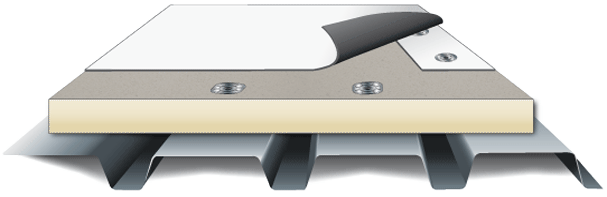
Fully adhered TPO roof assembly diagram

Fully Adhered TPO

The membrane is bonded across the substrate for strong stability and wind-uplift performance.

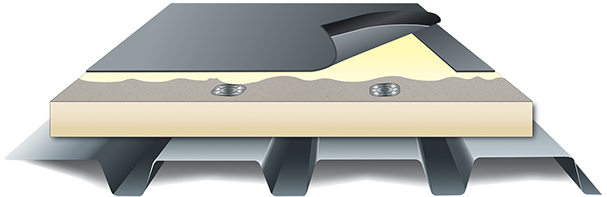
Mechanically fastened TPO roof assembly diagram

Mechanically Fastened

Approved fasteners and plates secure the system in a layout designed around the roof and wind conditions.

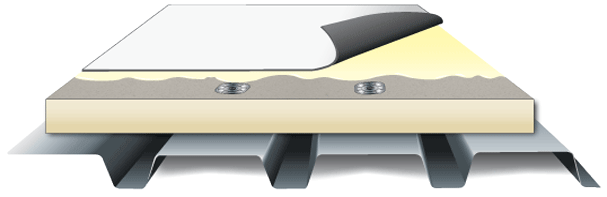
Fully adhered EPDM roof assembly diagram

Fully Adhered EPDM

The flexible membrane is bonded to the prepared substrate to create a stable, continuous roof surface.

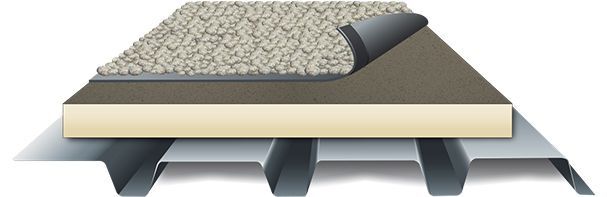
Ballasted EPDM roof assembly diagram

Ballasted EPDM

On appropriate large, open roofs, ballast can secure the membrane while protecting the assembly below.

Where Flat Roofing Fits

One roof type, many building needs.

Commercial Properties

Retail, offices, warehouses, multifamily buildings, additions, and facilities with rooftop equipment often depend on low-slope membrane systems.

Residential Applications

Modern homes, porches, additions, garages, balconies, and mixed-slope designs may include low-slope areas that require membrane roofing rather than shingles.

Product selection, membrane color, thickness, attachment method, assembly approvals, and warranty eligibility depend on the building and current manufacturer requirements. Highmark confirms project-specific details before installation.

Plan the Complete Roof

Start with the building, drainage, and details.

Highmark Roofing Partners can inspect your low-slope roof and develop a system recommendation for repair, replacement, or new construction.

Request a Free Quote